5-inch Carbon-Fiber FPV Drone
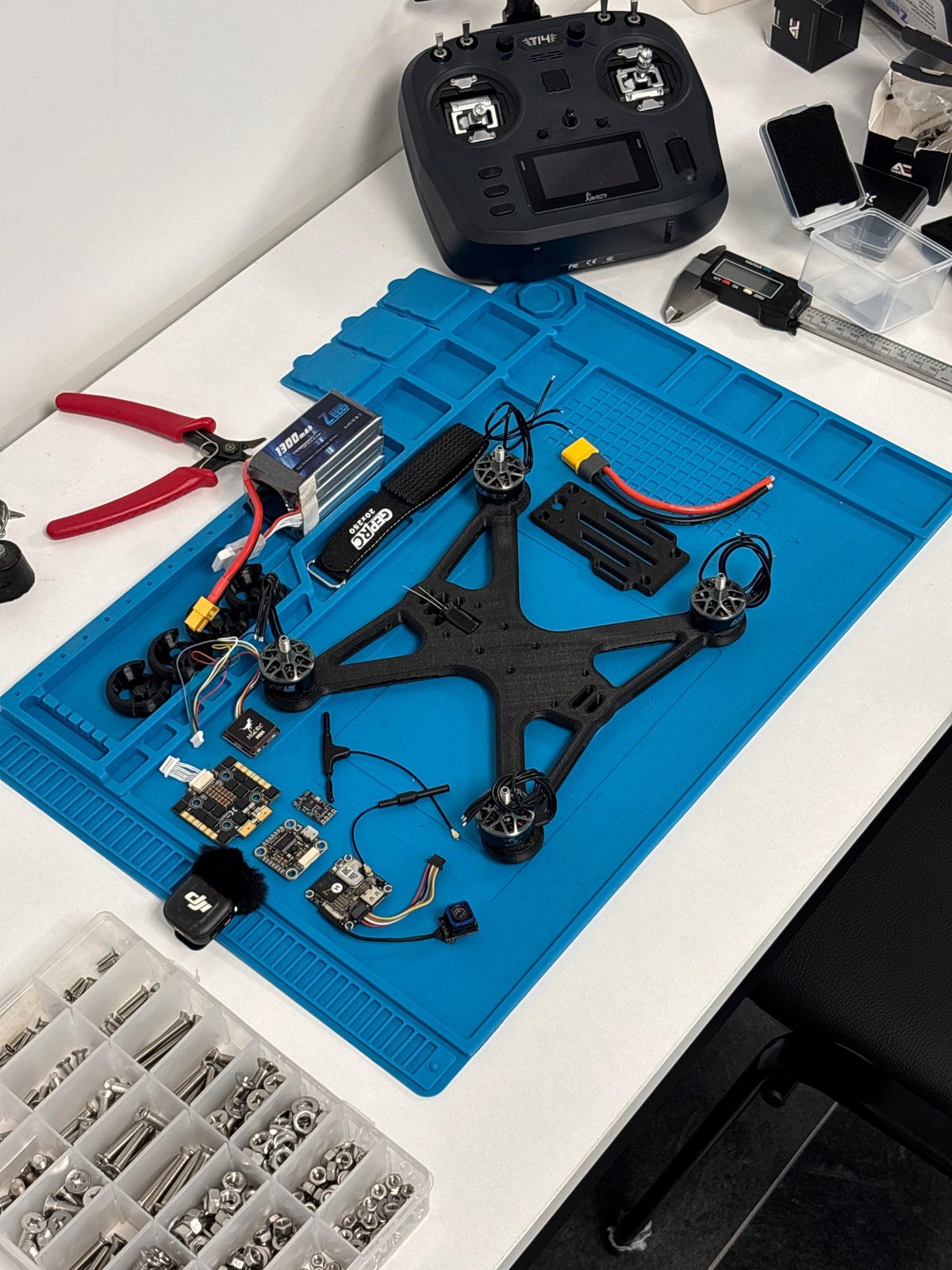
A 5-inch carbon-fiber FPV drone, designed and built around thrust, weight, and current calculations, and tuned in Betaflight down to GPS and return-to-home.
My partDesigner and builder
In short
A 5-inch carbon-fiber quadcopter I designed and built. I sized its propulsion and power from thrust, weight, and current calculations, configured and tuned Betaflight (PID loops, flight modes, GPS features, return-to-home), and evaluated GPS accuracy, RF link quality, and flight performance under GNSS jamming and IMU/GNSS integration constraints.
- What it is
- A 5-inch carbon-fiber FPV drone I designed, built, and tuned myself.
- Why it matters
- A drone flies well only when its propulsion and power fit its thrust, weight, and current budget, and its flight controller has to be configured and tuned before you can trust it with GPS features and return-to-home.
- My part
- I designed and built it, then configured, tuned, and tested it.
Step by step
- 1
Size
Propulsion and power components selected from thrust, weight, and current calculations.
- 2
Build
The parts go together on a 5-inch carbon-fiber frame.
- 3
Tune
Betaflight PID loops, flight modes, GPS features, and return-to-home behavior configured and tuned.
- 4
Evaluate
GPS accuracy, RF link quality, and flight performance evaluated under GNSS jamming and IMU/GNSS integration constraints.
For engineersHow it is built, its limits, and its keywords.
How it works
I selected the propulsion and power components from thrust, weight, and current calculations and integrated them on a 5-inch carbon-fiber frame. Then I configured and tuned Betaflight’s PID loops, flight modes, GPS features, and return-to-home behavior, and evaluated GPS accuracy, RF link quality, and flight performance under GNSS jamming and IMU/GNSS integration constraints.
Keywords
- FPV drone
- quadcopter
- UAV
- Betaflight
- PID tuning
- GPS
- return to home
- carbon fiber