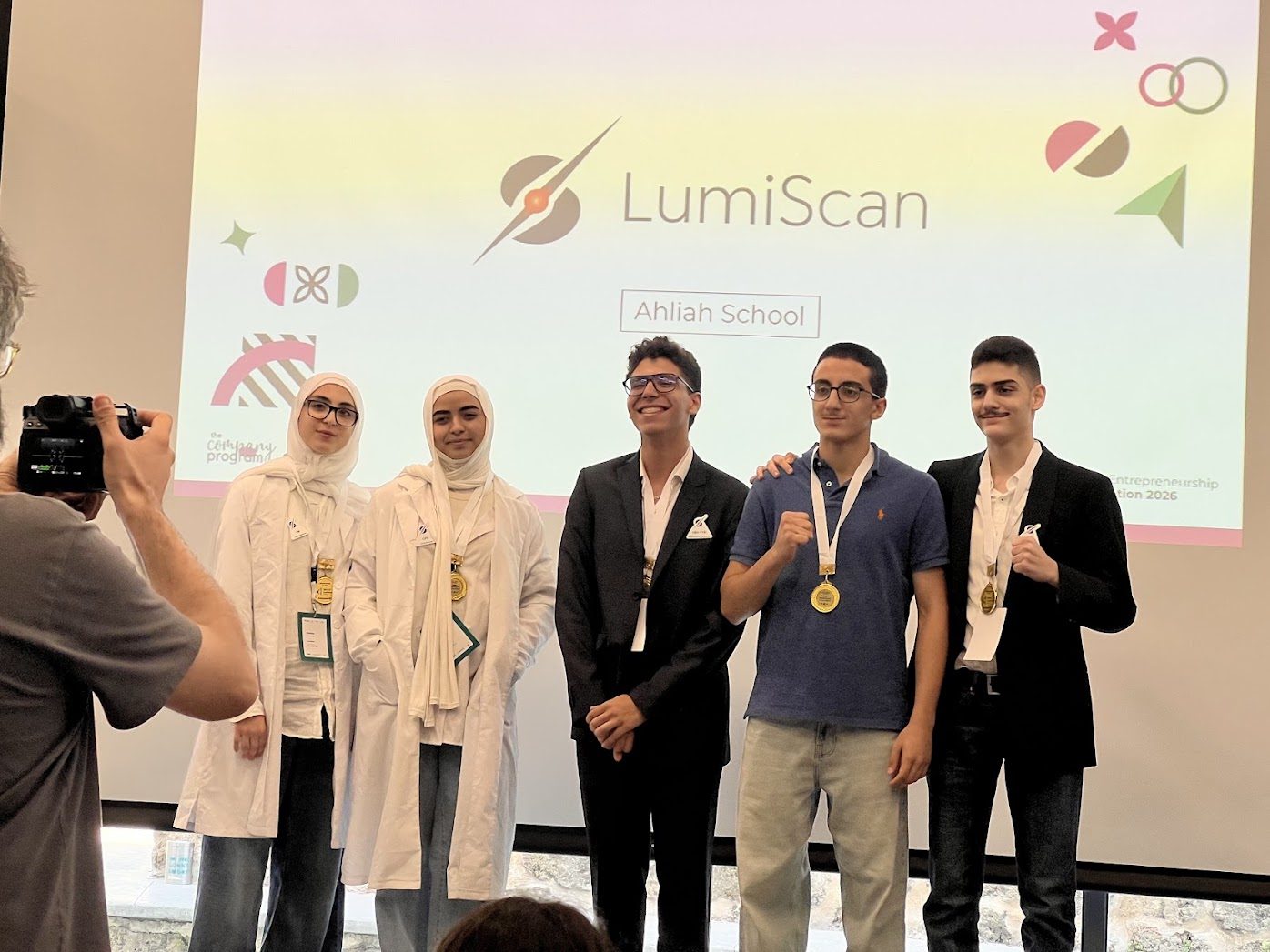
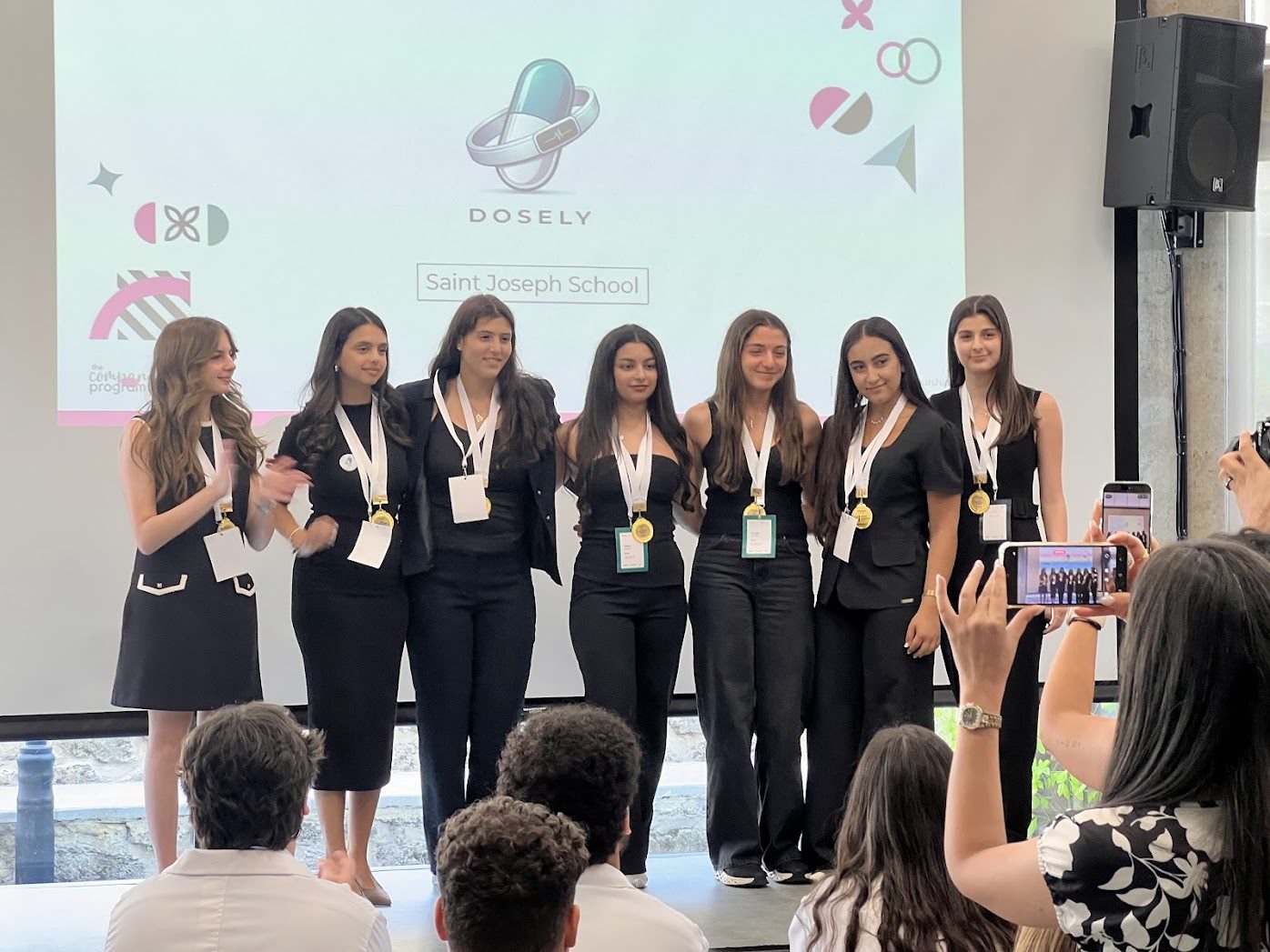
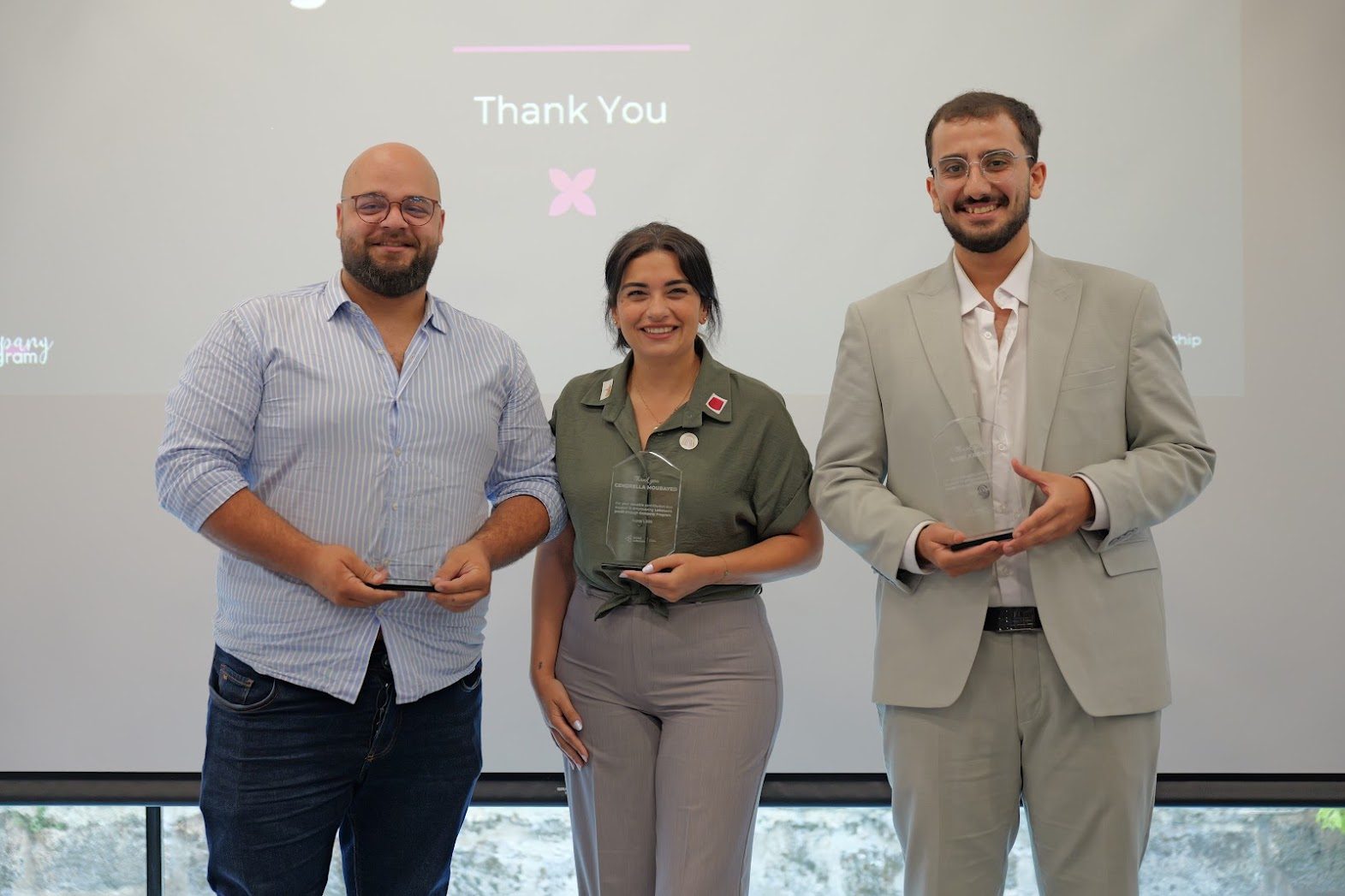
In 2026 I was a technical mentor in the INJAZ Al-Arab Company Program, where student teams start a company around a product of their own. I mentored two healthcare teams from their first ideas through technical development to working prototypes, which they exhibited at the program. Both teams won awards: Best Community Impact and Best Healthcare Innovation.
Two products
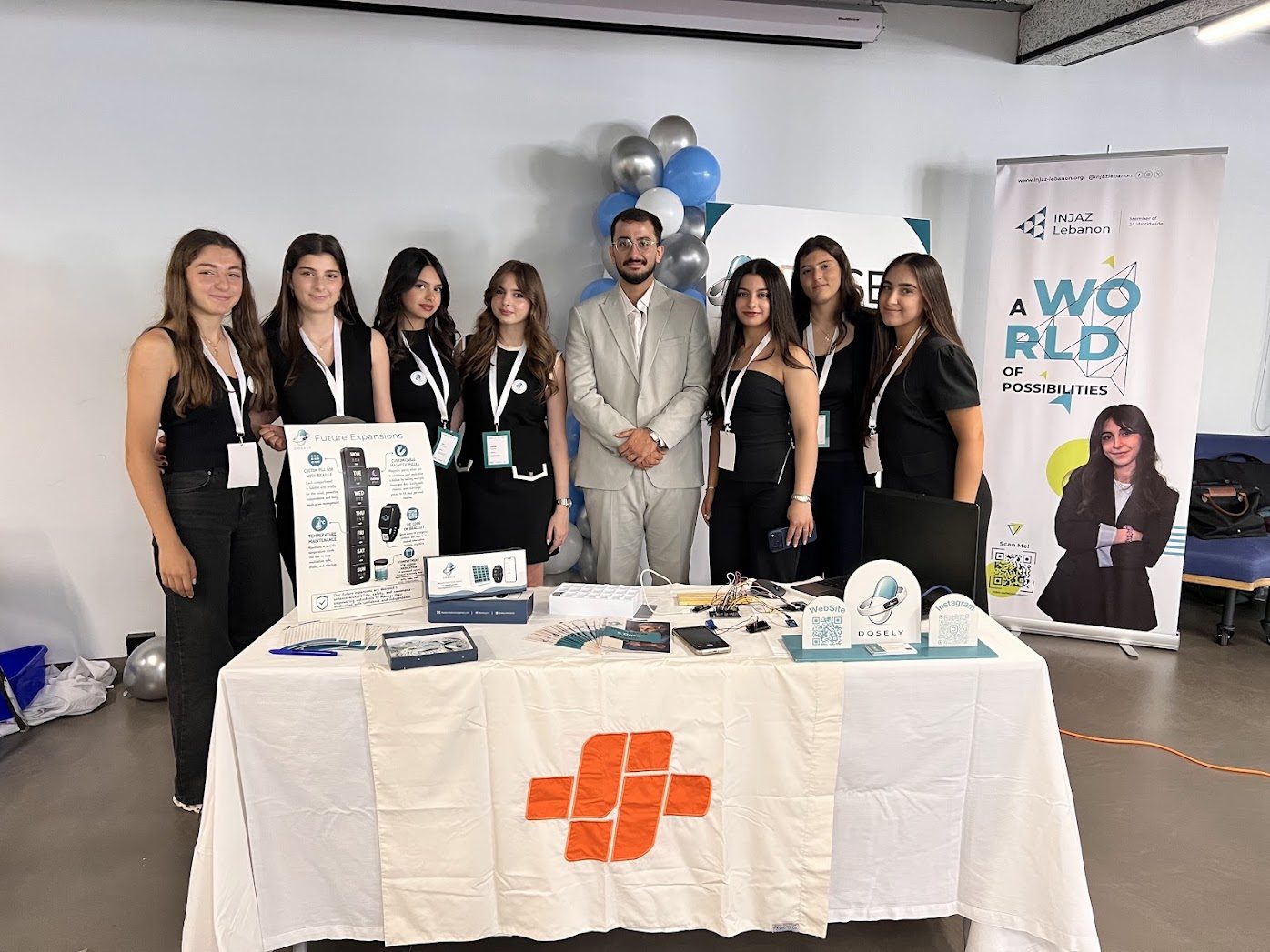
The teams were school students. LumiScan, from Ahliah School, built a melanoma-detection device. Dosely, from Saint Joseph School, built an IoT-connected elderly-care system: a wearable bracelet, a pillbox, and a mobile app that work together to monitor health and well-being. Both are hardware, software, and a real person on the other end, which is exactly where a first prototype tends to break.
How I ran it
I organized the technical side as a path the teams could follow on their own between sessions: first the specifications and a first prototype, then a minimum viable product and its quality, then how to scale it and sell it. Each step had a question the team had to answer before moving on, and a working demonstration rather than a slide at the end of it.
Mentoring here is closer to managing a small engineering team than to teaching. The work is in scoping: cutting a product down to what can be built and shown in the time there is, deciding what to buy and what to build, and keeping the hardware and the software converging instead of drifting apart. The teams did the building; my part was making sure what they built would work on the day.
It is the same lesson as running technical mentoring at NASA Space Apps, with more time and higher stakes: structure beats answers. A team that knows what it is trying to prove can usually find its own way to prove it.