Brainiacs Autonomous Race Car
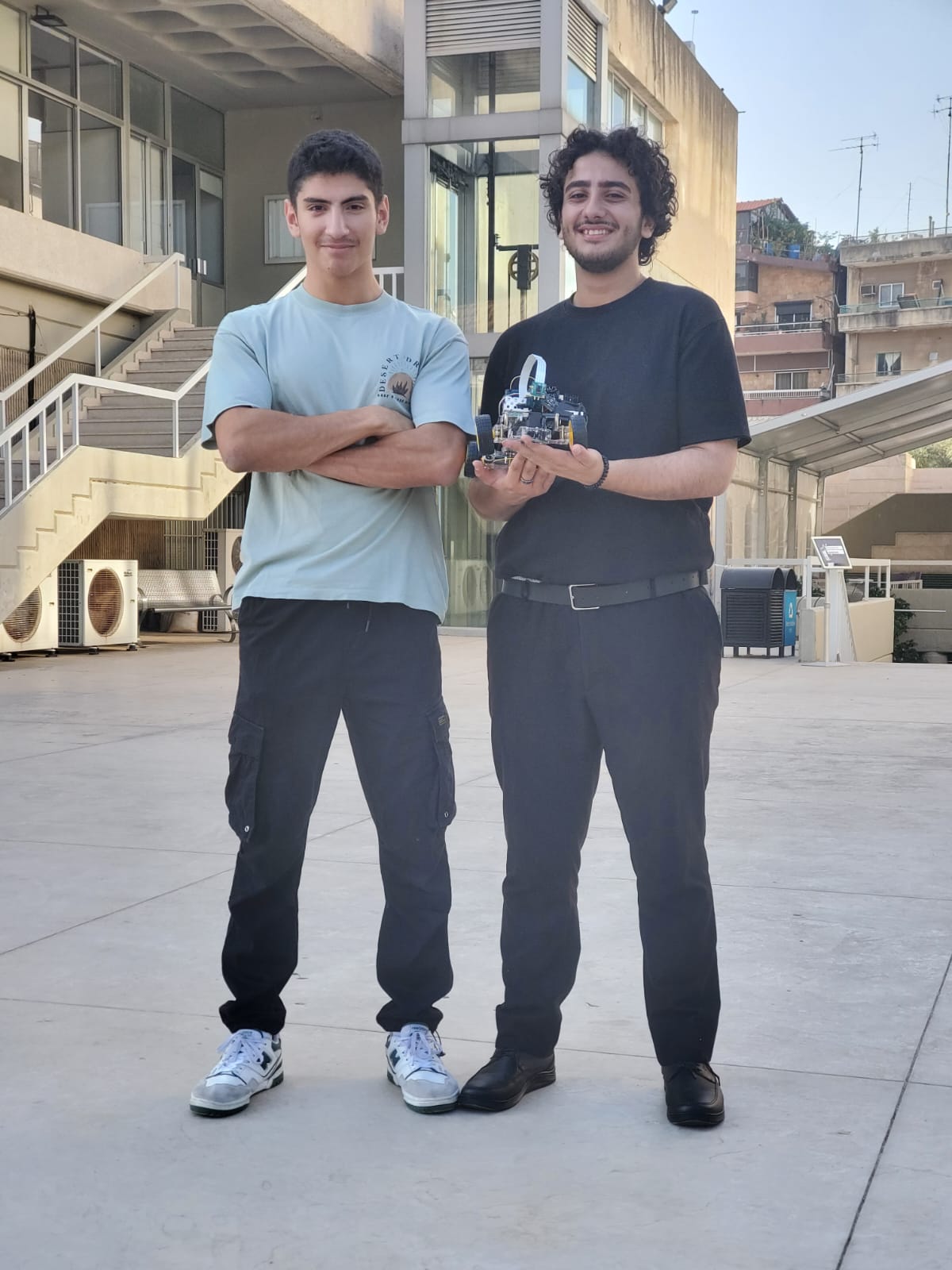
A self-driving model car that reads the course’s traffic signs and steers itself, built from scratch in 20 days.
My partTeam of two, with Wassim Ghaddar
In short
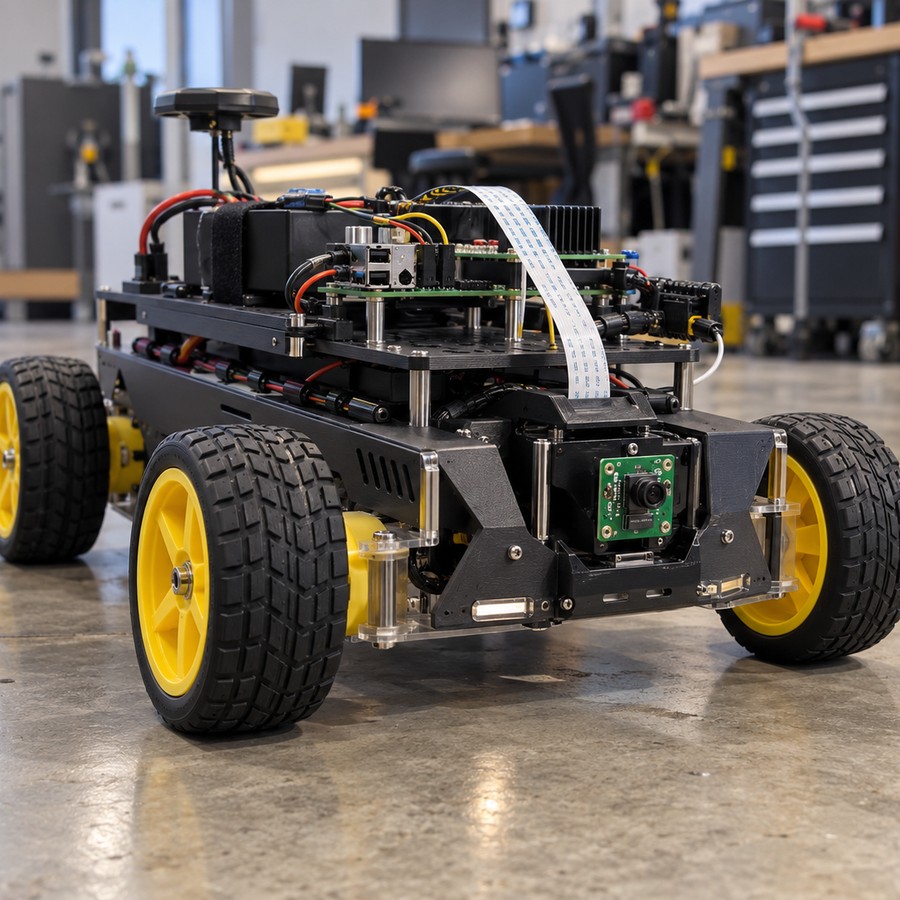
A WRO Future Engineers vehicle dividing Jetson Nano perception from Arduino Mega real-time control, with OpenCV traffic-sign logic, PID steering, an MPU6050 IMU, and TCS34725 color sensing.
- What it is
- A dual-processor autonomous vehicle built for the 2023 World Robot Olympiad Future Engineers challenge.
- Why it matters
- A twenty-day build had to combine visual understanding, traffic-marker logic, obstacle avoidance, and reliable motion on limited compute and a student budget.
- My part
- I worked on the system architecture, computer vision, sensor integration, and embedded control, alongside my teammate Wassim Ghaddar.
Step by step
- 1
See
The Jetson Nano runs OpenCV lane and traffic-sign logic in Python. Its output is a small stream of events, not raw imagery.
- 2
Decide
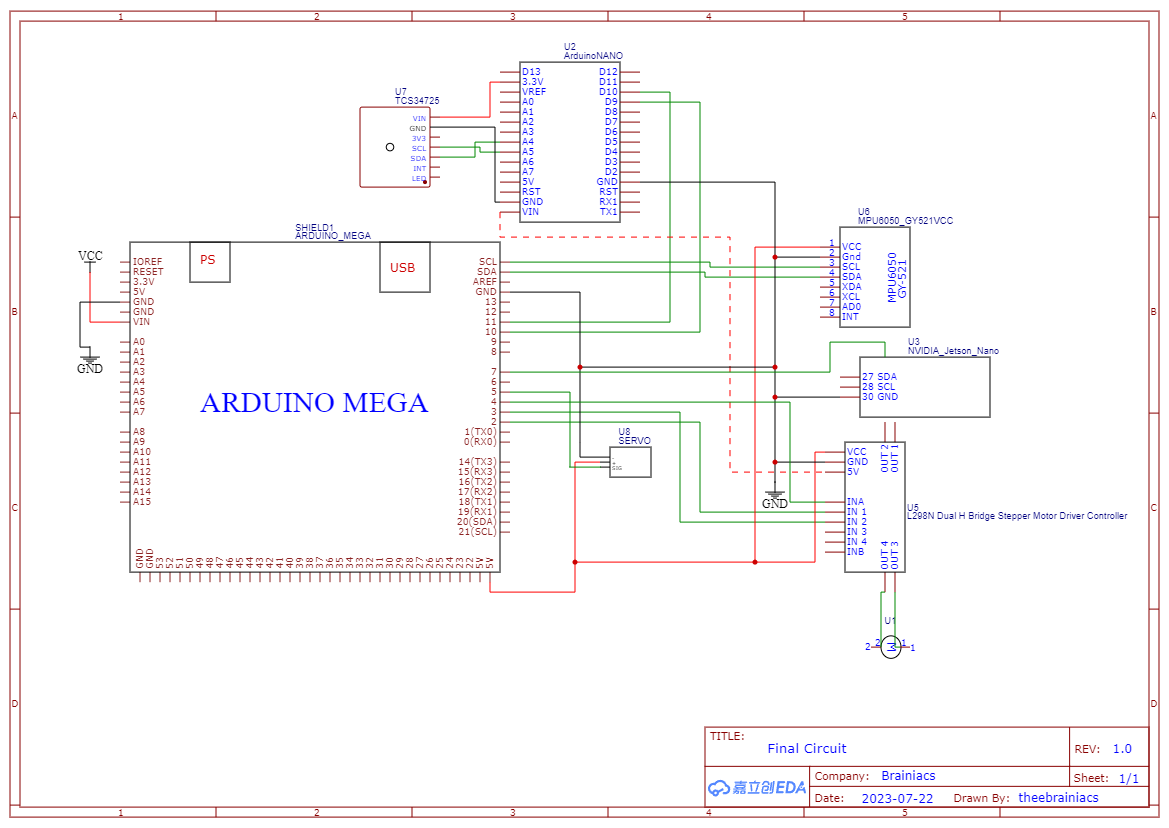
A TCS34725 color sensor and MPU6050 IMU refine track- and heading-related decisions when the visual channel is uncertain or off-cadence.
- 3
Steer
The Arduino Mega closes a PID steering loop at a predictable cadence, isolating time-sensitive control from the vision pipeline’s bursty timing.
- 4
Move
Motor commands drive the physical vehicle. Chassis, wiring, and power are part of the tuning problem, not incidental to it.
Results
- 20 days
- Build time
- from scratch, as RHU reported
- Third, Future Engineers
- Placement
- World Robot Olympiad, July 2023
- >95 teams / >250 participants
- Competition size
- WRO Future Engineers, as RHU reported
From the project
For engineersHow it is built, its limits, and its keywords.
How it works
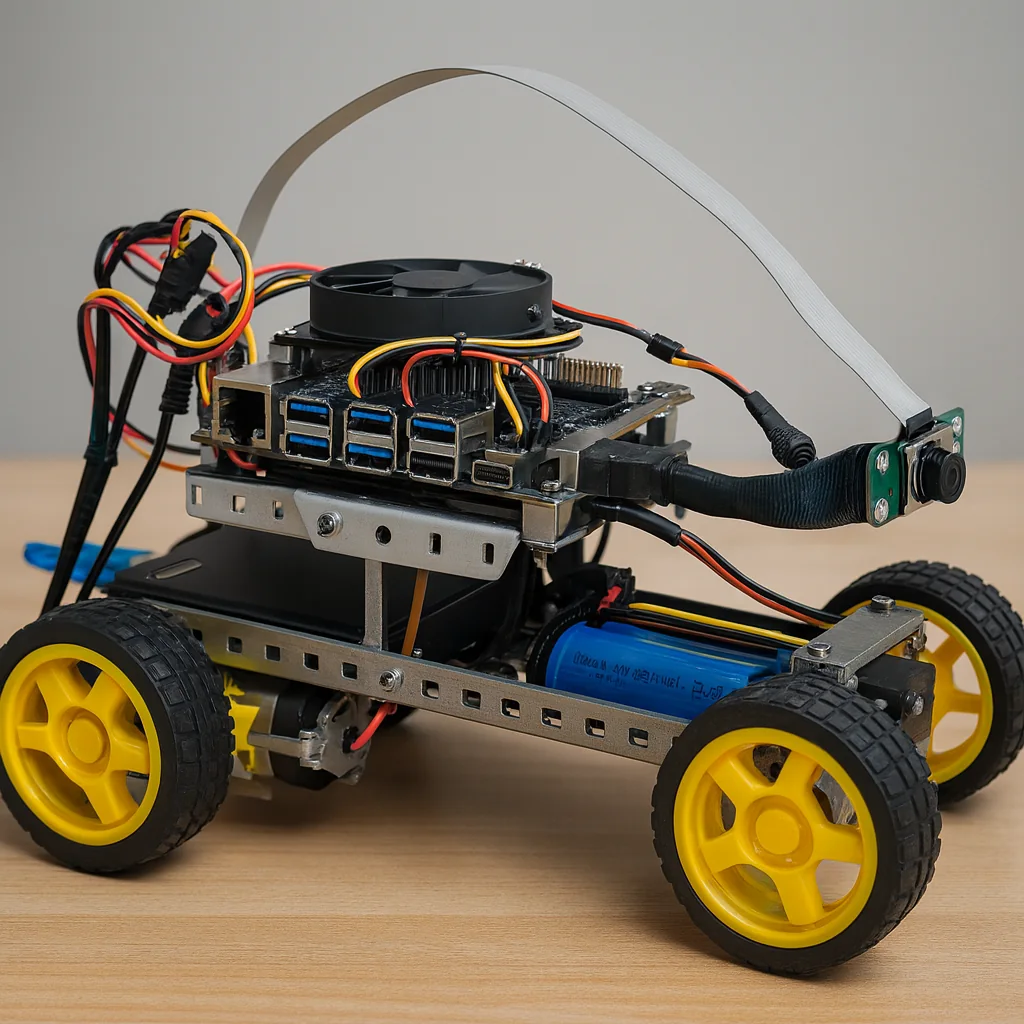
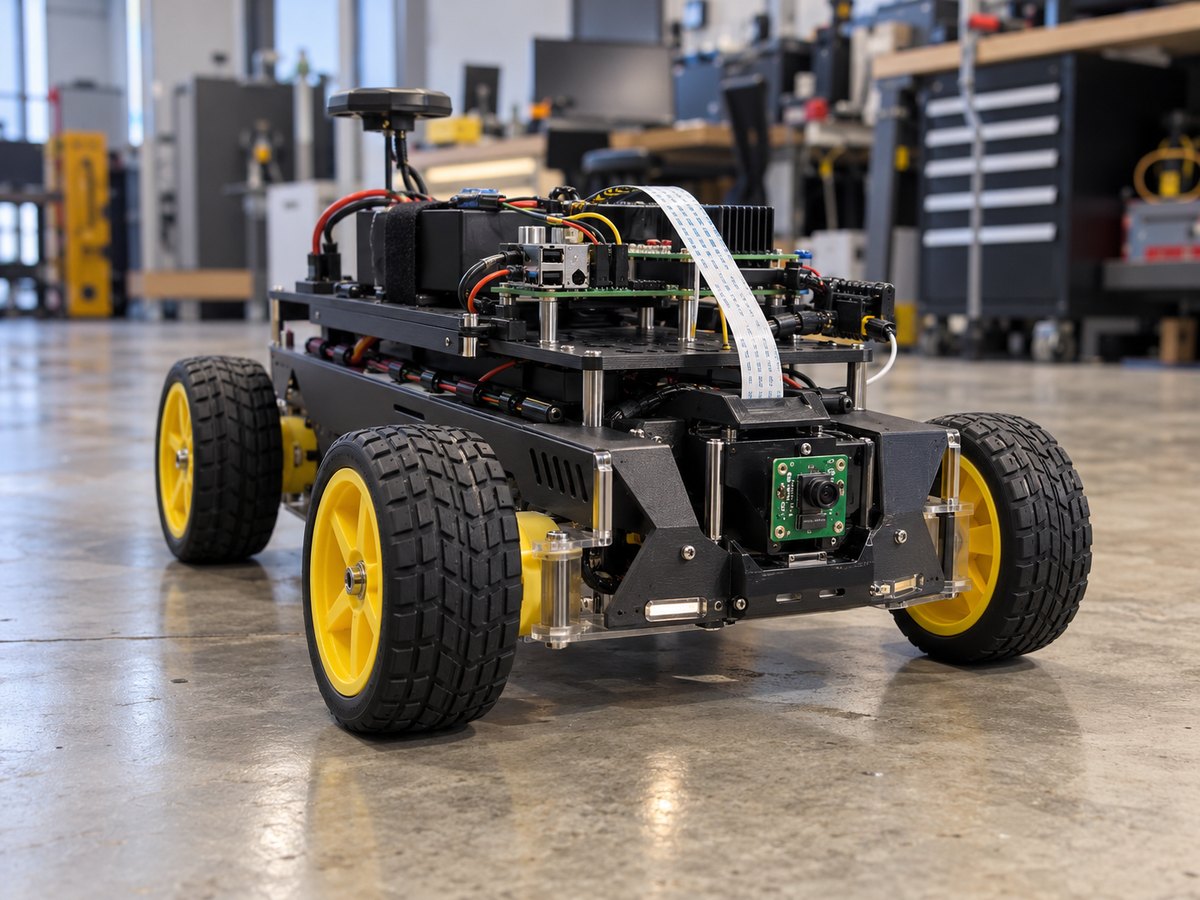
Perception runs in Python and OpenCV on a Jetson Nano and is sent as compact events to an Arduino Mega, which owns the time-sensitive steering PID and drivetrain commands. A TCS34725 color sensor and MPU6050 IMU close gaps the camera cannot handle alone.
Limits
- Rafik Hariri University reported third place in July 2023. We were later re-ranked to second, but there is no official page for the revised standing, so this page keeps the university’s figure.
- Twenty days only leaves so much time to optimise or document each subsystem.
- Track and traffic-sign behavior are tied to the WRO Future Engineers 2023 environment and cannot be generalized without new testing.
Keywords
- WRO Future Engineers
- Jetson Nano
- Arduino Mega
- PID steering
- MPU6050
- TCS34725
- sensor fusion